Your capacity
How much room is in your brain?
0 of 3 complete

A gentler way indoors
A humane, senior-aware plan for helping a 9-year-old outdoor German Shepherd–Husky mix feel safe inside—one small win at a time.
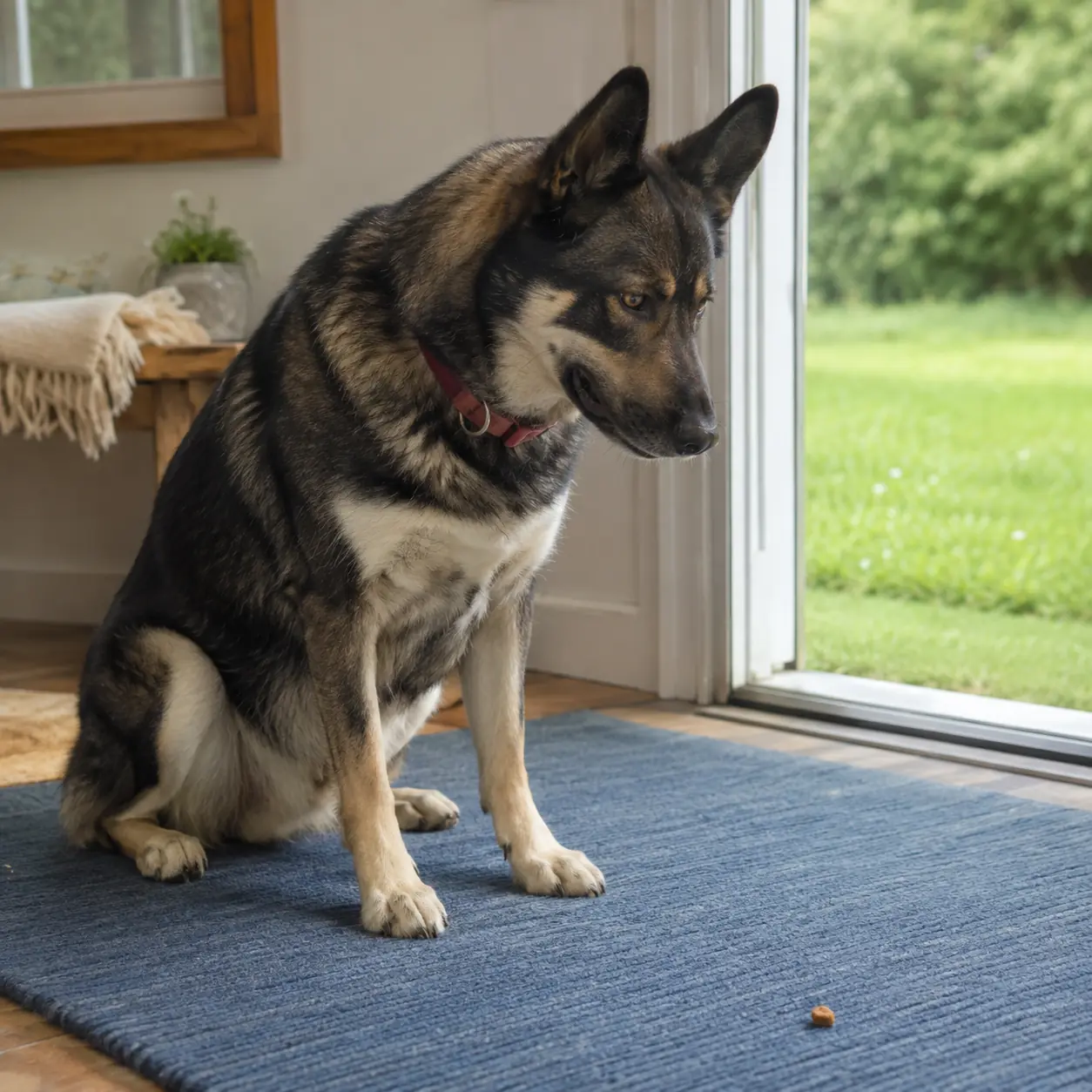
Today with Max
Choose the capacity you actually have. The small version counts, and essential care always comes first.
Your capacity
After , I will practice doorway calm for 5 minutes by the back door.
Linking one specific cue to one action reduces the need to remember later.Before training
This short screen guides the next step. It cannot certify that Max is safe with a person, animal, room, or situation.
See emergency signs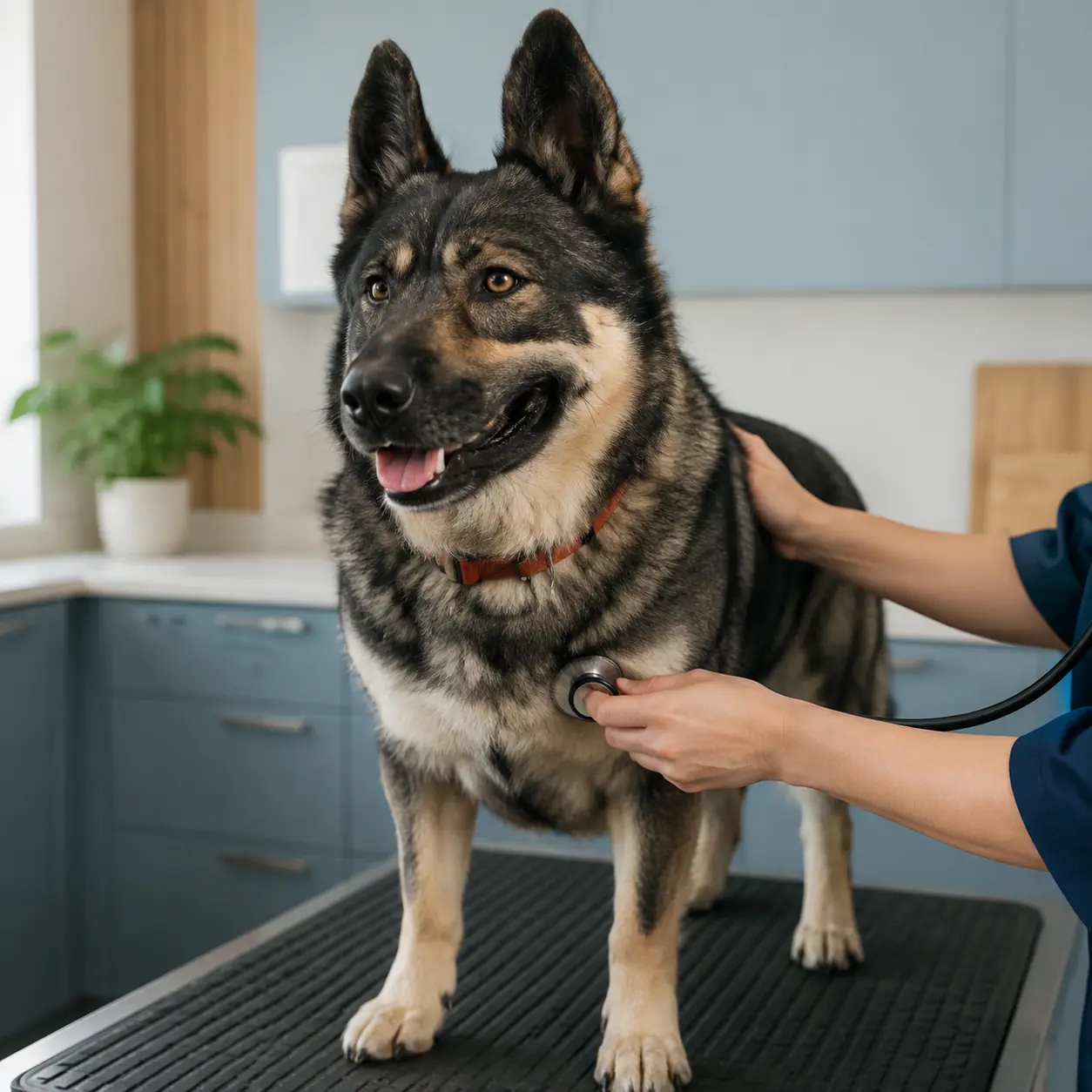
Veterinary preflight
Short videos of rising, walking, steps, eating, resting, and any unusual indoor response.
Pain and mobility, heart/lungs, teeth, ears/skin, parasites, hearing, vision, cognition, urine/stool, thirst, weight, and sleep.
New accidents, straining, confusion, night pacing, sensitivity to touch, exercise intolerance, or sudden behavior change.
The readiness roadmap
There is no seven-day transformation promise here. Repeat, simplify, or pause any phase based on Max’s body and behavior.
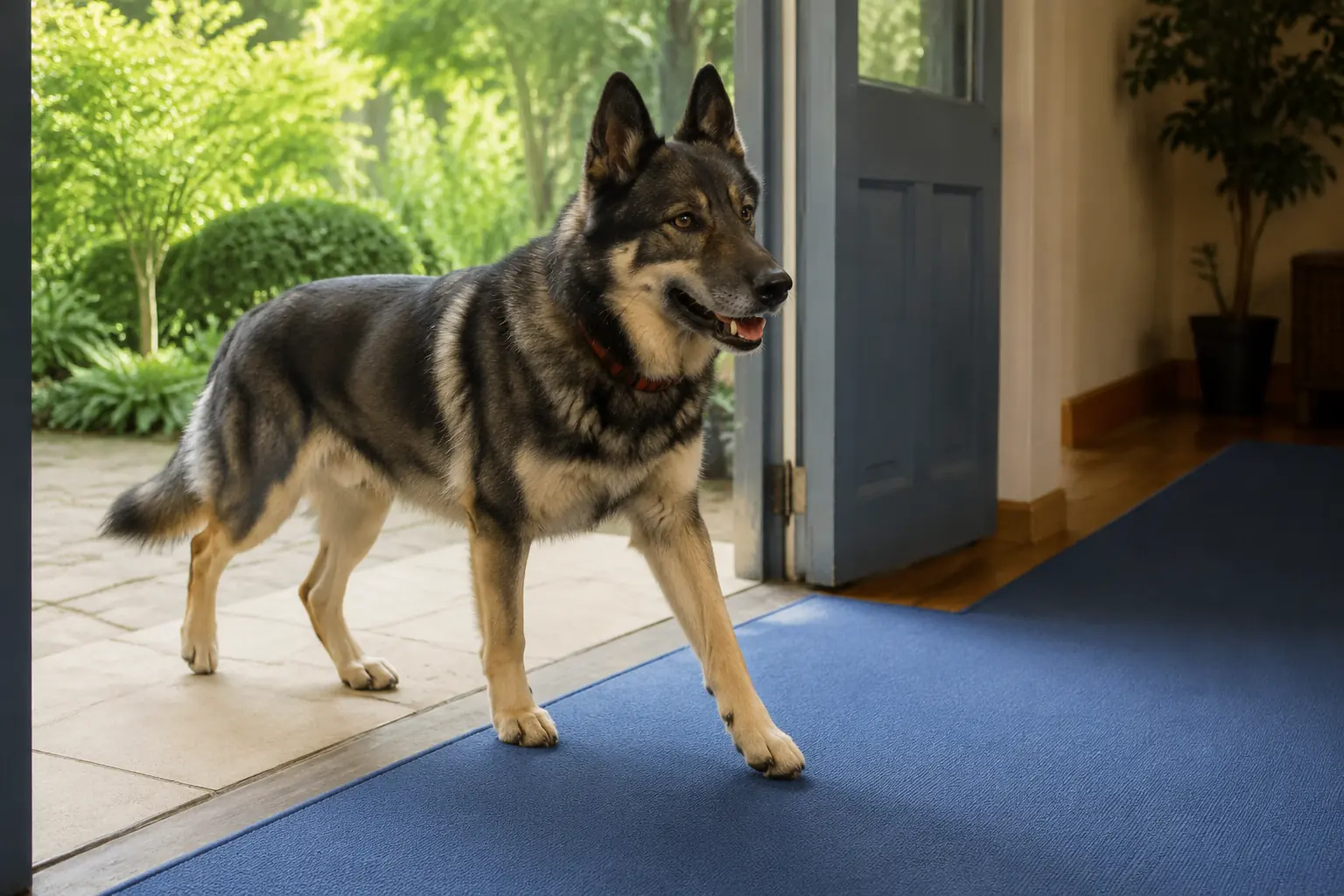
Prepare
Book a senior-dog exam, observe Max’s normal routine, and build one secure, non-slip home base.
Move on: Move on when essential setup is complete and no urgent health or behavior concern is waiting for professional help.
Step back: Pause if you notice new pain, confusion, accidents, breathing change, or a sudden personality change.
Threshold
Reward looking, leaning, or stepping inside. Never pull, carry, corner, or close the exit behind him.
Move on: Move on after several mostly-relaxed entries with a loose body and quick recovery from small surprises.
Step back: Make it easier if he freezes, scans, pants, scratches the exit, or refuses a reward he usually wants.
One room
Use one calm room, a familiar routine, brief supervised visits, and a predictable mat.
Move on: Move on when he explores, eats, rests, and exits calmly in this one space.
Step back: Reduce duration, sound, movement, or distance from the door—only one variable at a time.
Rest
Add meals, evening rest, and eventually sleep while protecting outdoor exercise and decompression.
Move on: Move on when resting is routine, toileting is increasingly predictable, and normal sounds no longer derail him.
Step back: Return to the last easy duration after a hard day. Nothing is erased.
Expand
New rooms, closed doors, visitors, nighttime, and alone-time are separate skills—not one leap.
Move on: A lasting indoor rhythm may still include outdoor time. Comfort and welfare—not perfect obedience—define success.
Step back: Panic, escape attempts, drooling, self-injury, or sustained distressed vocalizing mean stop and get qualified help.
Read Max, not the clock
Look for clusters, context, and recovery. Color is paired with words and symbols.
Loose body, normal breathing, sniffing, usual food interest, disengaging, resting.
Keep it easy or make one tiny increase.Pacing, scanning, freezing, tucked posture, exit focus, repeated vocalizing, refusing a normal reward.
Shorten or simplify one variable.Growl, snap, lunge, panic escape, self-injury, shutdown, relentless panting or drooling.
End safely and get qualified help.Indoor skill cards
Every card tells you when to stop and how to make the next attempt easier.
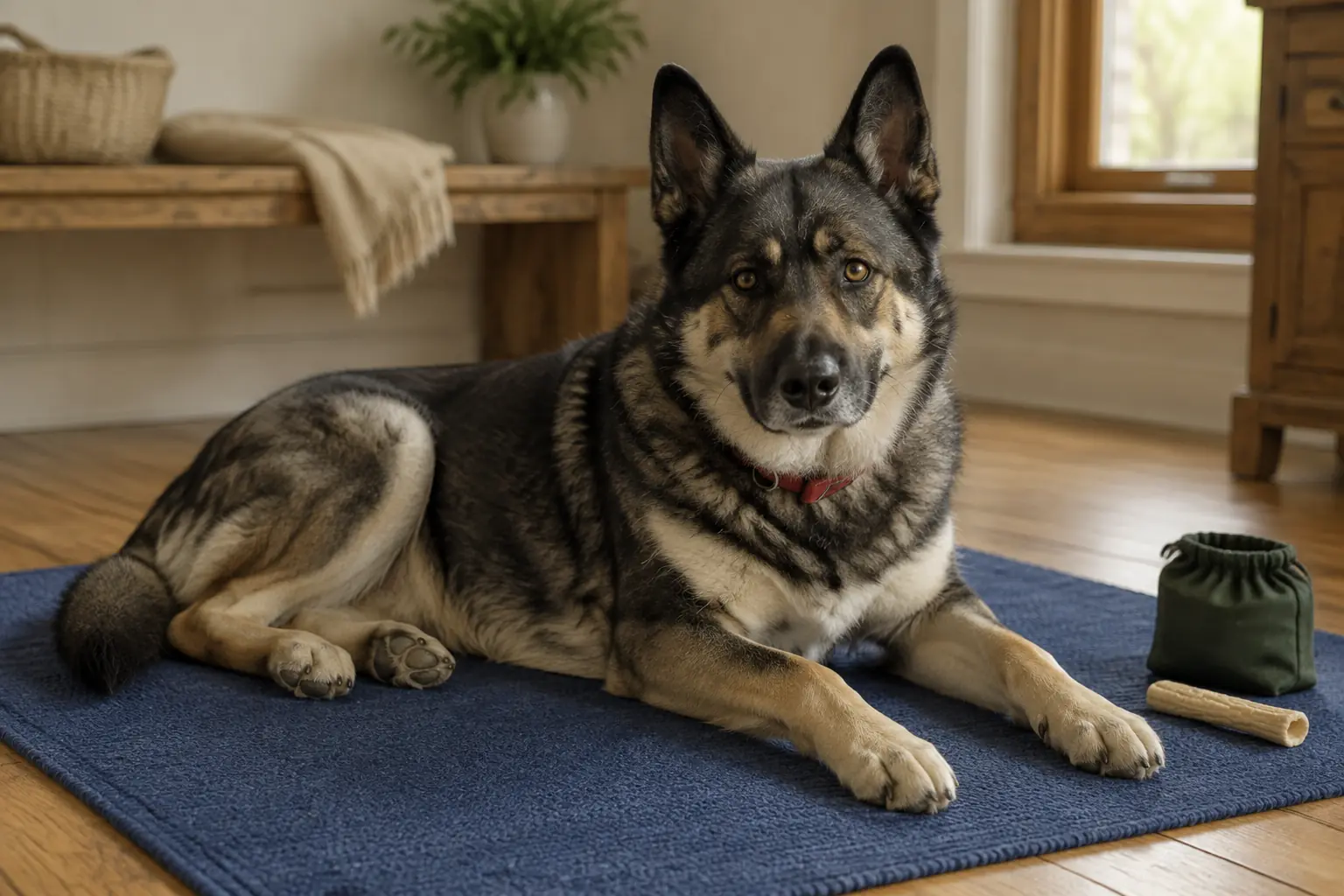
Gives Max an easy way to reconnect with you when the room feels unfamiliar.
SuppliesFive tiny rewards
Looks goodFour of five easy looks without repeating his name.
Make it easierMove to a quieter spot or wait for a natural glance, then mark it.
Stop whenStop if he avoids you, startles, or will not take his usual reward.
Moves Max without pulling his leash or reaching over his body.
SuppliesOpen hand + tiny rewards
Looks goodHe follows the hand one comfortable step.
Make it easierStart closer and reward a small head turn.
Stop whenStop if movement looks stiff, painful, or reluctant.
Creates one predictable landing place inside.
SuppliesNon-slip mat + 8 rewards
Looks goodFour paws on the mat with a loose body for several seconds.
Make it easierReward beside the mat or use a familiar washable blanket on top.
Stop whenStop if he freezes, guards the mat, or struggles to lie down.
Reduces door-dashing without turning the doorway into a conflict.
SuppliesHarness, fixed leash, secure barrier
Looks goodHe can stay loose while the handle moves.
Make it easierPractice several feet farther from the door.
Stop whenDo not open the door if exterior control is not secure.
Makes the outdoor bathroom routine predictable without pressure.
SuppliesFixed leash + reward
Looks goodA pattern becomes easier to predict over repeated outings.
Make it easierUse his current natural timing; do not rely on a generic bladder formula.
Stop whenStraining, blood, sudden accidents, or increased thirst need veterinary review.
Helps recover safe objects without grabbing, chasing, or provoking guarding.
SuppliesLow-value safe item + better reward
Looks goodHe releases a low-value item with a loose body.
Make it easierStart with an item he does not guard and more distance.
Stop whenStiffness, hard stare, hovering, growling, snapping, or guarding needs management and professional guidance.
Makes the outdoor-to-indoor cleanup routine less intrusive.
SuppliesSoft towel + rewards
Looks goodOne easy touch with no pulling away or body tension.
Make it easierReward seeing the towel without touching him.
Stop whenPain, flinching, growling, or sudden sensitivity needs veterinary attention.
Teaches that quiet indoor behavior—not only high energy—earns good things.
SuppliesA few rewards
Looks goodHe returns to resting after the reward.
Make it easierWork after toileting and a calm sniff walk.
Stop whenPersistent pacing, panting, scanning, or exit focus means the environment is too difficult.
House training
Assume Max is learning the indoor rules from the beginning. Never punish an accident or restrict water to prevent one.
Go out on a patternAfter waking, meals or substantial drinking, play, an indoor visit, and before bed.
Use one exit + one cueWalk to the same area, say it once, then stay quiet.
Pay after he finishesMark and reward immediately, then allow a short sniff so potty does not always end outdoor time.
If nothing happensReturn to active supervision or the gated zone and try again soon.
The practical kit
These are tool categories, not “best product” claims. Fit and supervision matter more than brand names.
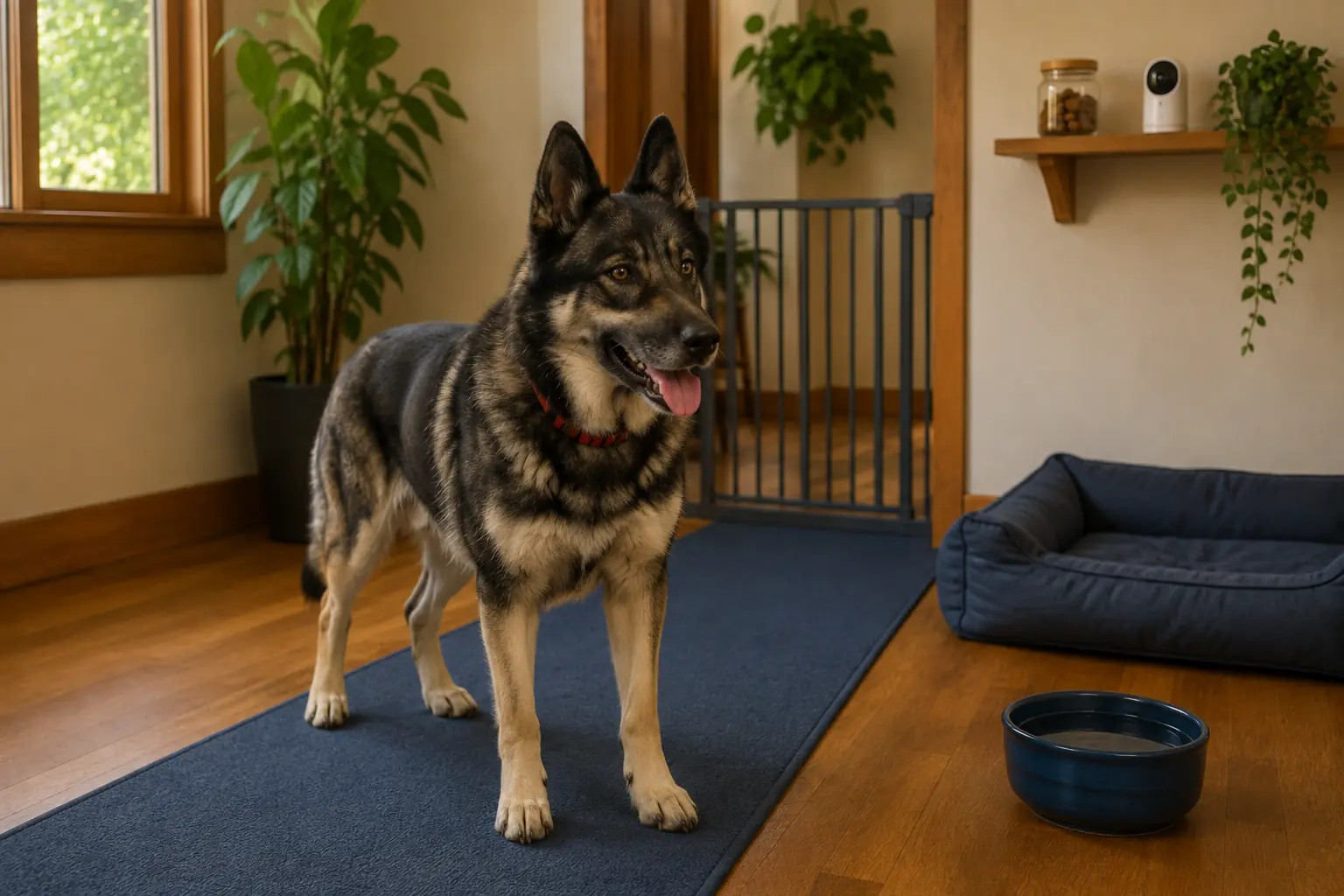
Runners, bath mats, or yoga mats from the door to Max’s bed and water. Secure edges so they cannot slide.
A securely mounted gate or exercise pen sized for a large dog. Use hardware mounting near stairs; pressure gates have limits.
Well-fitted, comfortable, and checked for rubbing. Add backup attachment if Max has escaped equipment before.
Verify current phone numbers before increasing doorway exposure. No collar or harness is escape-proof.
Supportive and easy to step onto, placed where Max will not be cornered or stepped over.
Use exactly as labeled and block access until dry. Quiet cleanup—never punishment.
Tiny treats or part of meals stored near the training area, safely out of reach of children and animals.
Use for brief absence assessment. Video can reveal pacing, vocalizing, drooling, or escape attempts that begin after you leave.
A safe food-stuffable toy, snuffle mat, scatter in grass, or rolled towel game. Supervise first and count the food.
Optional. A consistent calm marker word works just as well for this plan if another object becomes clutter.
For controlled recall practice in a suitable open area, attached to a harness. Never leave it dragging unattended or use it indoors.
Ask Max’s veterinarian or rehabilitation professional which design suits his joints, spine, strength, and home layout.
Only when risk warrants it, correctly fitted and conditioned gradually with rewards. Must allow panting, drinking, and treats.
Aversive methods carry welfare risk and are not more effective than reward-based training according to AVSAB.
A crate is optional and only appropriate after relaxed voluntary conditioning. Panic is a reason to stop, not wait longer.
Entanglement, strangulation, and fall risks increase around furniture, stairs, children, and mobility-limited adults.
Ibuprofen, naproxen, and other human medicines can seriously harm dogs. Use only medication prescribed for Max.
Treats and food enrichment count toward Max’s daily intake. Ask his veterinarian about calories, mobility tools, pain, medication, or diet changes.
When something happened
This guide cannot assess danger or diagnose a cause. If you cannot manage the situation without approaching or grabbing an aroused dog, create distance and call qualified help.
Open distance and choice: sit sideways, reduce noise, and reward a look or lean from outside.
Do not pull the leash, carry him, block his retreat, or close the door behind him.
End after one easy success. Next time, begin farther out or use a non-slip path.
Seek help if fear is intense, worsening, linked to pain, or paired with growling/snapping.
Offer a calm exit to toilet/decompress and reduce duration, noise, people, or distance from the door.
Do not add commands, restrain him in place, or try to exhaust the anxiety.
Return to the last duration where his breathing and body were normal.
Urgent breathing difficulty, collapse, blue/grey gums, heat exposure, or altered awareness needs emergency care.
Take Max out calmly, then clean with a pet enzymatic cleaner while he is elsewhere.
Do not scold, startle, rub his nose in it, or restrict water.
Log the time and shorten the interval before the next outdoor opportunity.
New accidents, straining, blood, increased thirst, diarrhea, pain, or nighttime confusion need veterinary review.
Open the easiest safe route out if you can do so without creating an escape risk.
Do not block him physically, shut him into a crate, or wait for panic to burn out.
Make the next indoor visit shorter and end before exit focus begins.
Frantic escape, broken nails/teeth, self-injury, drooling, or sustained panic needs professional help.
Increase distance, stop the sound if possible, and allow retreat. Reward recovery—not forced approach.
Do not replay the sound louder or hold him near it.
Reintroduce one sound at a much lower level while he is relaxed.
A sudden new sound sensitivity can reflect pain or sensory change; discuss it with the veterinarian.
Return before distress escalates if possible. Review camera footage and identify the first sign and exact latency.
Do not use “cry it out,” force a crate, or make the next absence longer.
Practice below the distress threshold—sometimes one or two seconds—while a qualified plan is arranged.
Panic, self-injury, escape attempts, heavy drooling, or sustained vocalizing warrants veterinary/behavior help.
Do not chase. Use a cheerful voice, move away from him, toss food low, and activate your local lost-dog plan if he does not return.
Do not corner, grab at, punish, or turn his return into a frightening event.
Verify tag and microchip information; rebuild an airlock and review equipment fit before another threshold session.
Contact local animal services, shelters, microchip registry, and veterinary care promptly if he is injured or missing.
Create separation with a door or barrier without confrontation. Attend to the injured person and seek medical advice.
Do not punish, grab his collar, test the trigger again, or ask a child to manage him.
Preserve context notes without staging a reenactment and arrange veterinary plus qualified behavior assessment.
Follow local reporting/quarantine rules. Emergency care is needed for serious human injury or an uncontrollable immediate threat.
Not a training problem
Call an emergency veterinarian immediately for these signs. For suspected poisoning, contact a veterinarian or animal poison-control service; do not induce vomiting unless directed.
Never give human pain medicine or another animal’s prescription to Max.
Research foundation
Direct controlled research on moving a nine-year-old outdoor dog indoors is sparse. This plan combines senior-care guidance, veterinary behavior, humane learning science, house-training practice, separation-distress guidance, and cognitive-accessibility research. Exact timelines are starting heuristics—not proven doses.
Pain, mobility, cognition, urinary issues, sleep, hearing, and vision belong in Max’s preflight.
AVSAB recommends reward-based methods and advises against aversive tools and forced exposure.
Breed ancestry is not a behavioral destiny. Max’s own history and body language guide the plan.
Short steps, stable cues, saved state, and optional timers reduce friction; they do not diagnose or treat ADHD.
Reviewed August 5, 2026. Open the original source for full context.
Senior screening, pain, mobility, cognition, elimination, senses
↗AVSABHumane Dog Training Position StatementReward-based training and risks of aversive methods
↗Merck Veterinary ManualBehavior Problems of DogsHouse-soiling, cognitive dysfunction, separation and confinement distress
↗CAPCGeneral Guidelines for Dogs and CatsVeterinarian-guided parasite testing and prevention
↗AVMAPreventing Dog BitesChild supervision and bite-risk prevention
↗Humane WorldHow to Potty Train Your Dog or PuppySupervision, predictable outings, reinforcement, calm accident response
↗ScienceAncestry-inclusive dog genomics challenges popular breed stereotypesBreed explains only part of individual behavioral variation
↗W3C WAIMaking Content Usable for People with Cognitive and Learning DisabilitiesClear steps, limited choices, orientation, memory support
↗W3C WAIWCAG 2.2Contrast, focus, targets, reduced motion, consistent help
↗NCIImplementation IntentionsLinking a specific cue to a specific action
↗JAMACBT for Medication-Treated Adults With ADHDTask lists, breaking tasks down, calendars, timing and distraction capture as a package
↗DACVBFind a Veterinary BehavioristSpecialist directory for complex behavior cases
↗For a deeper review
Methods, limitations, decision rules, and the full tool matrix in one downloadable document.